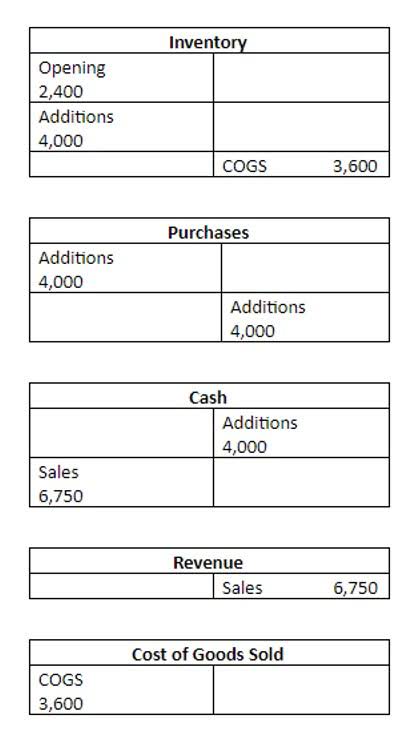

Suppose that instead of paying the rent monthly, you pay the rent six months in advance. This is ledger account a credit to cash, of course, but the debit does not go to the income statement. Allocating the transaction price is actually a complicated calculation.

Crude Oil Price Today WTI OIL PRICE CHART OIL PRICE PER BARREL
Short-term gains are taxed at ordinary income rates, which are often higher. This distinction highlights the importance of strategic asset holding periods to minimize tax liabilities. The tax implications of gains and losses significantly impact a company’s tax liability and cash flows. Understanding taxation requires familiarity with tax codes and regulations dictating tax recognition timing and manner. In the United States, the Internal Revenue Code provides guidance on gains and losses taxation. Income statements segment gains and losses into distinct sections, offering insight into their sources.
- A scenario that we left out of the table on the earlier slide is the one where revenue is recognized at the same time as payment occurs.
- As I said, don’t worry if they were a bit overwhelming to you.
- Later, when the service is performed, the unearned revenue is debited and revenue is credited, resulting in an increase in income on the income statement.
- Then we have to clear out the historical cost of the truck from the equipment asset account, and also clear out the accumulated depreciation from the contra account.
- With the sale of services, it’s when you do the thing they hired you to do.
- Once you’ve done that, you allocate it amongst the performance obligations.
- These principles ensure that financial statements accurately reflect the financial performance and position of a business.
Three: Transaction Price

To recognize revenue, you have to examine and parse the contract with the customer. Other times it’s just implicit in the usual way sales transactions take place in our economic system. Later when your customer net income recognition always increases: eventually gets around to paying you, you convert your accounts receivable asset into a cash asset, debit to cash credit to AR.
- This uncertainty is reflected as a liability in an allowance for doubtful accounts line item on the balance sheet, which attempts to estimate the amount that customers fail to pay.
- The tax implications of gains and losses significantly impact a company’s tax liability and cash flows.
- This allows investors and stakeholders to make informed decisions based on the company’s true financial position.
- For example, GAAP requires revenue recognition when it is earned and realized or realizable.
- Your company’s income statement might even break out operating net income as a separate line item before adding other income and expenses to arrive at net income.
- In either case the recognition of the expense is completely disconnected from any exchange of cash.
Net income recognition always increases: Multiple Choice liabilities. net assets. net liabilities. a

The Completed Contract Method is an income recognition approach where revenue and expenses are recognized only upon the completion of a project or contract. This method is commonly used in industries where it’s difficult to reliably estimate costs and outcomes until the project is finished. Additionally, the principle of conservatism suggests that when there is uncertainty about the collectability of revenue or the amount of expenses, a conservative approach should be taken.
Income recognition has significant impacts on financial statements. The income statement reflects the revenue earned during a specific period, allowing investors to assess a company’s profitability. Accurate income recognition ensures that revenue and expenses are matched appropriately, providing a clear picture of financial performance. The balance sheet is affected as revenue recognition determines the amount of assets and liabilities related to unsettled transactions. Income recognition refers to the process of acknowledging https://www.bookstime.com/articles/sales-revenue-definition-and-formula revenue in financial statements. It is a fundamental aspect of accounting that determines when and how revenue is reported.